
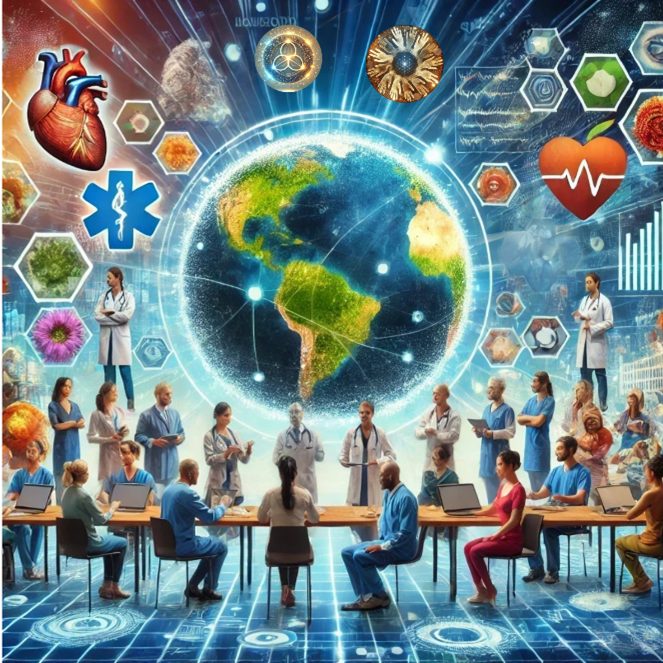
In a world where healthcare transcends economic and geographical boundaries, a groundbreaking initiative is reshaping how medical professionals collaborate. In a state-of-the-art hospital in London, Dr. James, a cardiologist, consults with Dr. Aisha, an infectious disease expert from Nairobi, not just for remote consultations in rural Africa, but for tackling heart disease patterns affecting both affluent and underserved communities worldwide. Meanwhile, Maria, a naturopath from Brazil, partners with neuroscientists in Tokyo to explore how traditional healing can complement cutting-edge mental health treatments. Across the globe, an AI-driven diagnostic system developed in Russia aids both elite private hospitals and resource-strapped rural clinics, ensuring precision medicine benefits all. In Malawi, community health workers collaborate with London-based physicians to enhance holistic healing approaches, proving that knowledge-sharing is a two-way street. Simultaneously, a leading dietitian, Dr. Elena from Madrid, works alongside doctors, culinary experts, medical institutions and community programs in the United States and India to design nutritionally optimised meal plans that cater to both preventative health and disease management, integrating medical, cultural, and personal dietary needs. In this seamless ecosystem of health cooperation, doctors, nutritionists, mental health experts, biomedical engineers, dietitians, and spiritual healers work as equals, seamlessly exchanging expertise and respecting each discipline’s contribution, recognising that all communities—wealthy or impoverished, urban or rural—can benefit from a truly integrated approach to well-being. Their collective efforts embody a new era of health collaboration, proving that no one nation, profession, or philosophy holds a monopoly on well-being. This is the future of healthcare: integrated, collaborative, respectful, inclusive and universally accessible.
Introduction
Health cooperation is the foundation of a globally connected medical system, ensuring that communities everywhere—whether affluent or underserved—receive equitable healthcare. By integrating expertise across borders and disciplines, nations work together to strengthen health systems, share knowledge, and address global health challenges.
The Need for Global Health Cooperation
With rising chronic diseases, pandemics, and mental health crises affecting all nations, no country can tackle these challenges alone. Cross-border collaboration has proven effective in medical research, and holistic healthcare initiatives. Programs like the Global Influenza Surveillance System demonstrate the power of coordinated action in protecting global well-being.
Strategies for Effective Health Cooperation
Investing in healthcare infrastructure, data sharing, and digital health solutions fosters sustainable cooperation. Strengthening multilateral partnerships among governments, healthcare professionals, and researchers ensures a seamless and inclusive health network.
Conclusion
Health cooperation is essential in ensuring the well-being of all individuals, particularly in an interconnected world where health crises know no borders. By fostering partnerships, investing in healthcare systems, and leveraging technological advancements, the global community can work toward a future where quality healthcare is accessible to all. The story of a world where medical professionals from all backgrounds—rich and poor, developed and developing nations, Western and Eastern medicine—work together seamlessly illustrates the boundless possibilities of health cooperation. This new paradigm recognises the unity of body, mind, and soul, ensuring that well-being is not just a privilege, but a right for all.
A unified approach to healthcare—integrating medical science, mental health, dietetics, nutrition, and traditional practices—can create a future where well-being is a universal right. By embracing global collaboration, we pave the way for a healthier, more resilient world.
0 comments